Knee pain treatment options

There’s no single path to managing knee pain – your treatment depends on your needs, lifestyle, and the condition of your joint. Most doctors will start with treatments that aim to reduce swelling, ease pain, and improve movement without surgery. But if those options don’t bring enough relief, your doctor may discuss surgical treatments to help you move more freely again.

Treatment without surgery

Simple changes can sometimes make a big difference.
Your doctor may recommend:

  • Lifestyle modifications (like gentle exercise or weight management)
  • Walking aids or knee supports
  • Physiotherapy to strengthen muscles around the joint
  • Anti-inflammatory medicines to reduce pain and swelling

These approaches can help you stay active and manage symptoms in the early stages of arthritis.

Knee replacement surgery

If non-surgical treatments aren’t enough to relieve your pain, your doctor may suggest knee replacement surgery.

Thanks to advances in medical technology, knee replacement today is more precise and personalized than ever before. Depending on how much of your knee joint is affected, your doctor may recommend either a partial knee replacement or a total knee replacement. Both procedures aim to relieve pain, restore movement, and help you get back to the activities you enjoy.


Total knee replacement

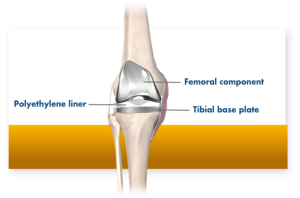
During a total knee replacement, also known as total knee arthroplasty, your surgeon removes the worn or damaged parts of your knee joint and replaces them with specially designed metal and plastic components called implants.

These implants are made to mimic the natural movement of a healthy knee, helping you move with greater comfort and stability.

Partial knee replacement

If arthritis is detected early and the damage is limited to one area of your knee, your doctor may recommend a partial knee replacement. In this procedure, only the affected part of the knee is replaced, preserving as much of your natural bone and tissue as possible.

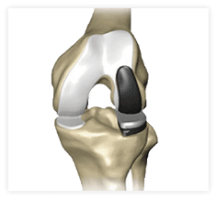
Unicondylar knee

i  

In a unicondylar knee replacement, only one area (or compartment) of the joint is replaced.

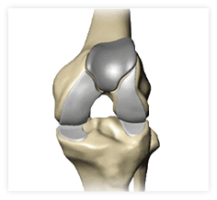
patellofemoral knee

i  

A patellofemoral knee replacement replaces the kneecap (or patella) and the grove at the lower end of the thighbone (or femur).

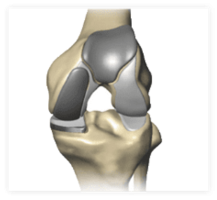
bicompartmental knee

i  

A bicompartmental knee replacement affects two compartments of the knee – the inside (medial) and knee cap.

Robotic-arm assisted knee replacement

Robotic-assisted technology is changing the way knee replacement surgery is planned and performed. It combines the expertise of your surgeon with advanced tools designed to enhance precision and control during surgery.

With robotic assistance, your surgeon can create a personalized surgical plan based on the unique shape and condition of your knee. For patients, this means a procedure that’s tailored to their individual anatomy, performed with consistency and attention to detail – all guided by their surgeon’s skill and experience.