This site is intended for Indian residents.
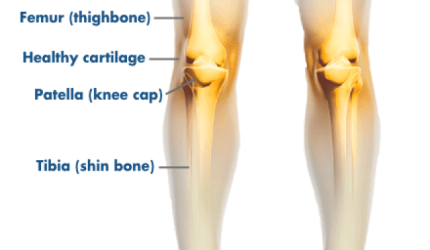
To understand why your knee hurts, it helps to know how this important joint works. Your knee is the largest joint in your body and functions much like a hinge – allowing you to walk, bend, sit, or climb stairs.
It’s formed where three bones meet:
Strong bands of tissue, called ligaments, keep these bones stable and in the right position. Cartilage acts as a natural cushion, preventing bones from rubbing against each other and absorbing the impact of daily movements like walking, running, or jumping.
Your body also produces a natural fluid called synovial fluid, which keeps the joint well-lubricated and moving smoothly.
When all these parts work together, your knee moves easily – without you even noticing. But when something goes wrong, the pain and stiffness can make even simple movements feel difficult.

Osteoarthritis
i
With Osteoarthritis, the smooth cartilage that cushions the ends of your bones gradually wears away. As the cartilage thins, the bones in your knee may begin to rub against each other, causing pain, stiffness, and swelling. This is the most common type of arthritis and often develops with age or after years of joint stress.
Rheumatoid arthritis
i
Rheumatoid arthritis, sometimes called inflammatory arthritis, is an autoimmune condition. This means your body’s immune system mistakenly attacks the lining of your joints, leading to chronic inflammation. Over time, this can damage cartilage and bone, causing pain and deformity if left untreated.2
Post-traumatic arthritis
i
Post-traumatic arthritis can develop after a serious injury, such as a fracture or ligament tear that affects the knee joint. When the joint surface becomes uneven due to the injury, it increases friction during movement. Over time, this wear and tear can lead to arthritis and joint pain.1,3
If you or any of your family member is experiencing knee pain due to arthritis, start by visiting a trusted hospital and speaking with your doctor immediately.
In most cases, they’ll begin with non-surgical treatments such as medications, physiotherapy, or lifestyle changes to help reduce pain and improve movement. However, if these treatments no longer provide relief, your doctor may discuss advanced options – including joint replacement surgery to replace the damaged parts of your knee and help restore mobility and comfort.
The information provided on this website is for general informational purposes only and is not intended as a substitute for professional medical advice, diagnosis, or treatment. Always seek the guidance of a qualified healthcare professional with any questions you may have regarding a medical condition or treatment options. Stryker does not dispense medical advice. This website may include contact details of hospitals, shared solely to help patients identify and contact healthcare facilities. Inclusion in this contact list does not imply endorsement, affiliation, or recommendation by Stryker India Pvt. Ltd. (“Stryker”). The information displayed is published with the consent of the respective institutions and is believed to be accurate at the time of posting. Stryker shall not be liable for any direct, indirect, incidental, or consequential damages arising out of or in connection with the use or misuse of the content on this website or the services of any listed providers. This website may contain links to external websites not operated or controlled by Stryker. We are not responsible for the content, accuracy, or privacy practices of such external sites. All content on this website, including text, graphics, logos, and other materials, is the property of Stryker or its licensors and is protected under applicable intellectual property laws. Unauthorized use is strictly prohibited. Stryker reserves the right to modify or update this disclaimer at any time without prior notice. Continued use of the website constitutes acceptance of any changes made.